animalfunfacts.net - The Animal Encyclopedia for Kids

ADVERTISEMENT

Koala

Koala Photo: worldswildlifewonders/Shutterstock

Koala Facts

Size 24-33 inches (60-85 cm)
Speed Up to 18 mph (30 km/h)
Weight 9-30 pounds (4-14 kg)
Lifespan 10-15 years
Food Eucalyptus leaves
Predators Birds of prey, dingos
Habitat Australia
Order Diprotodontia
Family Phascolarctidae
Scientific name Phascolarctos cinereus
Characteristics Marsupial that exclusively eats eucalyptus

Main Characteristics

Koalas are marsupials that inhabit Australia and feed on eucalyptus leaves. Along with kangaroos, they are considered some of the most famous animals in Australia. Koalas are also referred to as koala bears. But are they actually bears? No, they are called that simply because they resemble a cute bear in appearance.

Name

The name "koala" comes from the language of the Indigenous people of Australia, the Aborigines. It translates to "does not drink". They named it this because they never saw it drinking. In reality, koalas drink very little, but when it rains, they sip on raindrops that trickle down the tree trunks.


ADVERTISEMENT - ARTICLE CONTINUES BELOW

Species

Koalas are also known as koala bears. In fact, they closely resemble bears: they have a broad nose, round ears, fluffy fur, and a short tail. They look like small, living teddy bears. However, koalas are not bears and are not carnivores. They are marsupials. For this reason, they are not related to pandas either. The giant panda is a true bear.

Koala or Bear - What’s the Difference? Koala or Bear - What’s the Difference? - Photo: Maridav (left), Erik Mandre (right)/Shutterstock

Distribution and Habitat

Koalas are found in the southeastern and eastern regions of Australia. Their habitat consists of eucalyptus forests.

Way of Life

Koalas are solitary creatures that are most active at night. They spend most of their lives in eucalyptus trees. They are excellent climbers and use their rear ends to wedge themselves in the forks of branches to avoid falling. Most of their time is spent eating eucalyptus leaves and sleeping. They only come down to the ground to climb up another tree, as they are easy prey for predators when on the ground.

Adaptation to Habitat

Koalas are perfectly suited to their arboreal environment. Since they spend most of their time perched in tree forks, they have a short tail, as a long one would be quite uncomfortable. Consequently, their spine is curved, and their rear end is rounded. Their two thumbs and rough pads provide them with a secure grip. Because they need to consume a lot to obtain sufficient nutrients, they have large cheek pouches where they can "store" their food temporarily. Their intestines are three times the length of their body, allowing them to digest the fibrous leaves thoroughly after chewing. The liver takes care of the toxins found in the leaves.


ADVERTISEMENT - ARTICLE CONTINUES BELOW

  • Short tail: makes perching in trees more comfortable
  • Curved spine: makes perching in trees more comfortable
  • Round rump: makes perching in trees more comfortable
  • Large cheek pouches: for storing food
  • Long intestine: helps digest food
  • Two thumbs: aid climbing Rough, ridged pads: aid grip

Koala Characteristics Koala Characteristics - Photo: Mari_May/Shutterstock

Anatomy and Appearance

Size and Weight

Koalas grow to be 24-33 inches (60-85 cm) tall and weigh 9-30 pounds (4-14 kg). The males are noticeably larger and heavier than the females.

Ears

They have large, round ears with long, white hair.

Fur

Koalas have a thick, gray, brownish-gray, or brown fur. It looks incredibly soft, but it actually feels quite coarse, similar to sheep's wool.


ADVERTISEMENT - ARTICLE CONTINUES BELOW

Brain

Koalas have a large head, but their brain is quite small, averaging only about 0.6 ounces (19 grams). The rest of the head is filled with fluid. Why is that? Koalas have developed a small brain because their food is low in nutrients, and the organ requires a lot of energy. However, that doesn't mean they are unintelligent!

Pouch

Female koalas have a pouch on their belly to raise their young. In kangaroos, it opens upwards, but for koalas, it's the opposite. It opens downwards. The advantage of this design is that no dirt gets into the pouch while digging. This may sound surprising since koalas live in trees and do not dig. However, their ancestors did.

Thumbs

Humans have only one thumb on each hand. However, koalas have two thumbs on each hand! These are referred to as "opposable" thumbs (from the Latin "opponere" meaning to oppose). They can grasp with both thumbs just like we do with our thumb and index finger. The second thumb provides a particularly strong grip when climbing. By the way, this doesn't mean they have six fingers; they still have five – just like us.

Fingerprints

There are only two animal species that, like us humans, have fingerprints: primates and ... koalas!

Koalas Feed On Eucalyptus Leaves Koalas Feed On Eucalyptus Leaves - Photo: dangudmrong/Shutterstock

Diet

Koalas are herbivores. They exclusively feed on eucalyptus leaves, consuming between 7-21 ounces (200-600 grams) each day. They are quite selective, enjoying only 30 out of approximately 600 eucalyptus species. Additionally, they favor older leaves as these contain fewer toxins. In spring, some leaves can be particularly toxic. Occasionally, they also ingest a bit of soil, bark, or pebbles, which aids in the digestion of eucalyptus.

Behavior

Sleeping

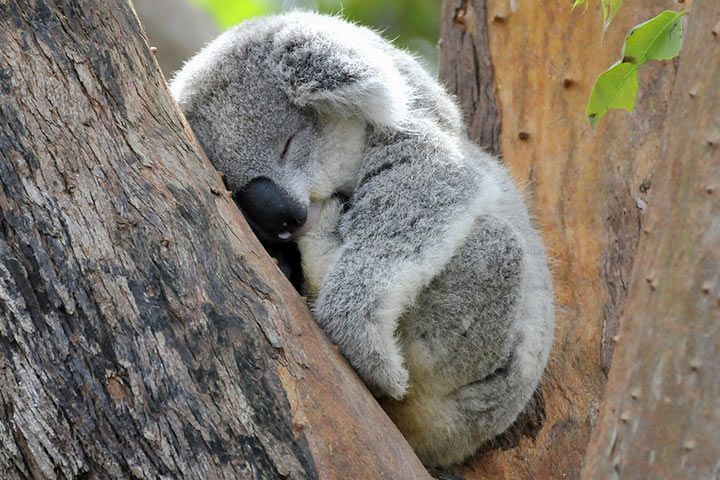
Koalas are quite the sleepyheads! They spend over 14 hours a day sleeping. Additionally, they rest for about 4-5 hours because searching for food is quite exhausting. This search also takes around 4-5 hours each day. A day goes by so quickly! But why do koalas sleep so much? It's simple: their diet consists of tough, fibrous leaves. These leaves are low in nutrients and very difficult to digest. Sleeping helps them conserve energy and makes it easier to digest the leaves.

Fur Cleaning

Koalas do not lick their fur clean. Instead, they use their claws like a comb to remove dirt and loose hair.

Movement on the Ground

On the ground, animals aren't as agile as they are in trees. However, when they need to run away from something, they can really pick up speed and reach up to 18 mph (30 km/h)!

Hydration Needs

For many years, it was believed that koalas never drink and quench their thirst through the water found in eucalyptus leaves. However, in 2020, researchers observed that koalas do drink, but only during rain. They lick the droplets that run down the tree trunk with their tongues.

Calls

Male koalas roar to fend off other males or attract females. They sound like a revving motorcycle or a snorting pig.

Are Koalas Dangerous?

Koalas appear very peaceful. One would love to cuddle and pet them like a stuffed animal. But are they really that friendly? Wild koalas are not aggressive, but they tend to be quite grumpy and standoffish. They can scratch if they feel threatened. This poses a problem, as they can transmit dangerous diseases in the process. For instance, chlamydia. It's best to avoid touching them.

Koala Sleeping Koala Sleeping - Photo: Andywak/Shutterstock

Senses and Abilities

Sense of Smell

Koalas possess a keen sense of smell. They only need to sniff eucalyptus leaves to instantly identify which ones are the "good leaves" and which are the "bad leaves".

Smell

Koalas have a scent somewhat reminiscent of cough drops, as the strongly aromatic oils from eucalyptus leaves escape through their pores.

Climbing

Koalas are excellent climbers. They have two thumbs that assist them in gripping. The pads on their fingers and toes are very rough, providing extra grip.

Muscles

Koalas have some impressive muscles! Their arm and shoulder muscles, in particular, are quite strong. In fact, they are so strong that they can effortlessly climb trees that are 130-160 feet (40-50 meters) tall.

Swimming

Can koalas swim? No, they would drown.

Jumping

Koalas are capable of jumping. However, it would be more accurate to say they actually hop. They climb trees by reaching higher with both hands and then pulling up both feet at the same time. When descending, they always alternate between using one hand and one foot.

Are Koalas Intelligent?

The brain of koalas is significantly smaller than their skull. Does that make them dumb? After all, eucalyptus leaves are not exactly considered "brain food." Nevertheless, they definitely have a good memory, as they remember the locations of their favorite trees. They may not be able to solve puzzles, but they are as smart as they need to be to survive.

Koala Running Koala Running - Photo: Travis Doljes/Shutterstock

Life Expectancy

In the wild, koalas can live for 10 to 15 years. The oldest koala was a female named Midori. She lived in captivity and reached the age of 25.

Enemies and Threats

Natural Enemies

Koalas have very few natural enemies since they spend most of their time in trees. In those trees, their only concern is with birds of prey. However, occasionally they do come down to the ground where they can be killed by dingoes and dogs.

Human Impact

Destruction of Habitat

The primary threat to koalas is the destruction of eucalyptus forests. A staggering 44% of the original forests have already been cleared, mainly to make way for growing feed for livestock. Their habitat is also being ravaged by bushfires. The massive bushfire in 2020 is estimated to have claimed the lives of around 60,000 koalas.

Road Traffic and Dogs

Another significant issue is the increasing number of roads being constructed and the constant flow of cars. Additionally, dogs are often fatally injured. Every year, 4,000 koalas lose their lives solely due to traffic accidents and dog attacks.

Hunting

In the past, koalas were hunted for their fur. Fortunately, this has been banned for a long time.

Conservation Status

Koalas are classified as an endangered species. According to an estimate by the IUCN, there were between 100,000 and 500,000 individuals in 2014. There are no more recent data from the IUCN. However, the "National Koala Monitoring Program" has provided updated figures. They estimate that by 2024, there were only be between 95,000 and 238,000 koalas left. The "Australian Koala Foundation" estimated in 2023 that the number is significantly lower: between 38,000 and 63,000. In any case, the population has more than halved over the past decade.

Importance for the Ecosystem

Koalas don't seem to do much for their habitat. However, they play a crucial role in the entire ecosystem. By consuming leaves, they reduce the risk of wildfires, as they prevent dry, flammable foliage from accumulating. In their search for food, they also break off branches and leaves, which serve as an essential food source for many ground-dwelling insects. Additionally, during the rainy season, koala droppings provide important fertilizer for the soil.

Koalas Are Often Hit by Cars and Suffer Fatal Accidents Koalas Are Often Hit by Cars and Suffer Fatal Accidents - Photo: Andrea Geiss/Shutterstock

Reproduction

Gestation and Birth

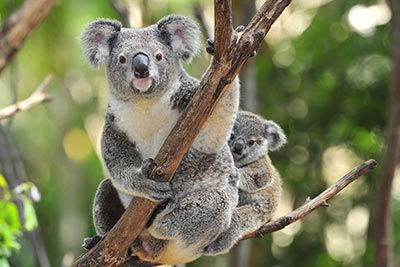
For koalas, the gestation period lasts 35 days. At birth, the baby measures only 0.8 inches (2 cm) and is quite helpless. Additionally, it is born hairless and cannot see yet. Instead of exploring the world, it crawls directly into its mother's pouch right after birth. It doesn't open its eyes until 22 weeks later. After about six months, it makes its first exit from the pouch.

Raising

When the young one is strong enough to crawl out of the pouch, it doesn't mean that its sweet little life is over just yet. For now, it gets to observe the world from its mother's back for another six months in peace. It takes a full year for a koala to become independent.

Baby Food

When young koalas are big enough to stop needing their mother's milk, they first eat the soft feces of their mother. Yes, this is no joke, it's really true. The feces contain essential nutrients that help build their gut. They assist in warding off diseases and preparing for the digestion of fibrous leaves.

Koalas as Pets

Koalas are wild animals, which makes them unsuitable as pets. It is challenging, if not impossible, to provide them with a proper living environment. For instance, they require very specific eucalyptus leaves and trees for climbing. Additionally, they are not fond of cuddling and can transmit diseases.

Evolution and History

In Australia, fossil discoveries of a prehistoric koala from 100,000 years ago suggest that koalas may have once been the size of an adult bull.

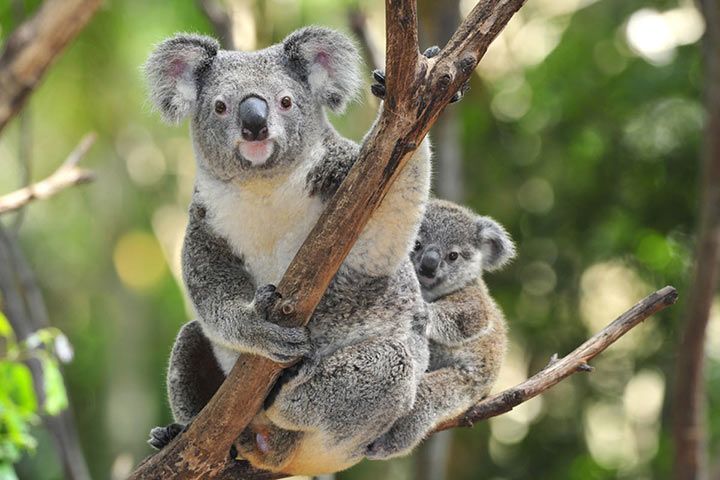
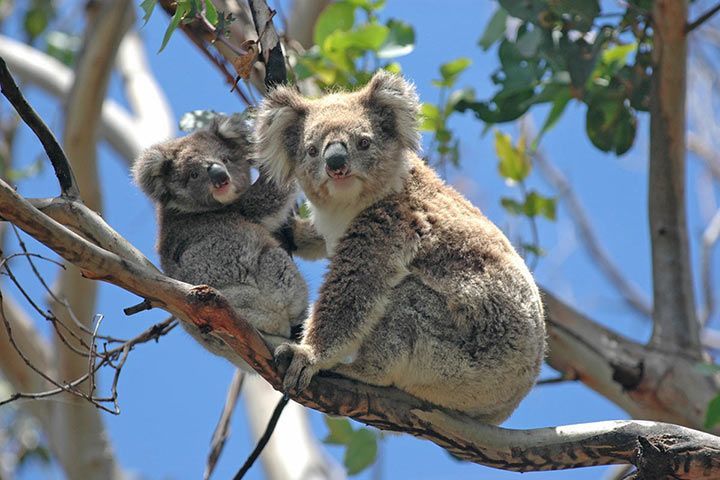
A Koala Mother and Her Offspring A Koala Mother and Her Offspring - Photo: robert cicchetti/Shutterstock

Fun Facts

Koalas Can Be Stressed Out

Koalas wiggle their ears when they feel stressed. Sometimes, they even develop a nervous hiccup. Stress negatively impacts their already weak immune system.

The Koala Is Related To:

Animals in the Same Biome:


Sources:


Related Articles:


Marsupial Species Fact Sheets


ADVERTISEMENT


See all topics on animalfunfacts.net: