animalfunfacts.net - The Animal Encyclopedia for Kids

ADVERTISEMENT

All About Snakes

Scaly skin and super tongues – why snakes are dangerous hunters even without legs and arms!

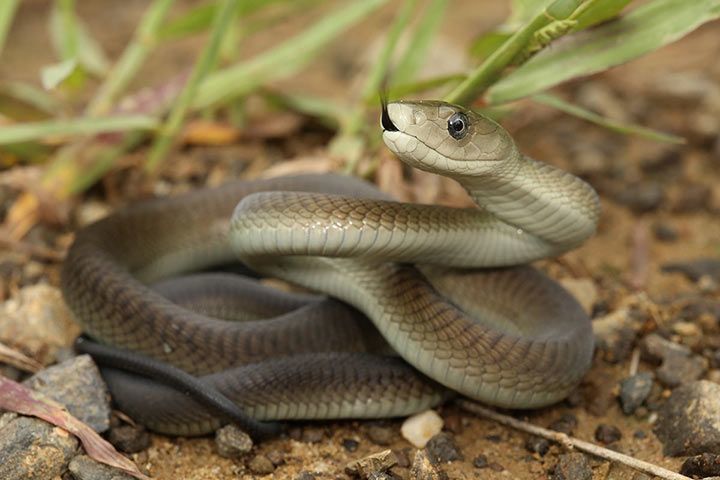
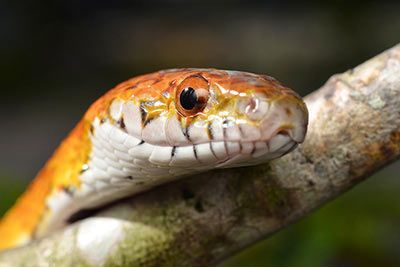
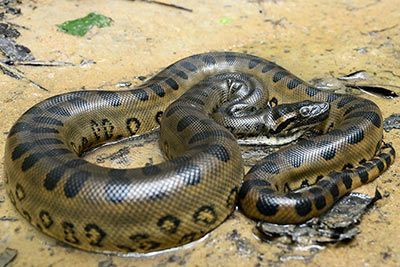
All About Snakes All About Snakes - Photos: (TL-BR) Gualberto Becerra/Shutterstock, Panupong/stock.adobe.com, Jason Mintzer/Shutterstock, Forest man72/Shutterstock

What Are Snakes?

Snakes are reptiles that lack arms and legs. They move by bending their long, flexible bodies into an S-shape – this is often described as 'slithering'. They possess an excellent sense of smell, using their tongues to 'taste' the air. Most snakes are harmless, but there are venomous snakes that capture their prey with poison, as well as constrictors that suffocate their prey. They typically eat small animals like mice, birds, or insects, but can also consume larger creatures such as capybaras, young tapirs, and caimans. Snakes inhabit nearly every continent and thrive in a variety of environments, including forests, deserts, and aquatic settings.

Main Characteristics of Snakes

  • There are 4,000 species of snakes. Among them, 700 are venomous.
  • Snakes can be found all over the world, except in the polar regions.
  • They inhabit a variety of living environments both on land and in water.
  • You can even find them in extreme places like deserts and high mountains.
  • In Germany, there are only two venomous snakes: the asp viper and the cross adder.
  • The country with the highest number of venomous snakes is Australia.
  • There, 30 species of venomous snakes can be found.
  • Snakes do not have legs.
  • They use various methods like wavy movements, sidewinding, and crawling.
  • Snakes have a scaly, dry skin.
  • As snakes grow larger, they need to shed their skin. It doesn't grow along with them.
  • Snakes have teeth to hold onto their prey or to inject venom into them.
  • The snake with the longest fangs is the Gaboon Viper. Their fangs can grow up to 5 cm long.
  • Snakes are carnivores. They feed on rodents, amphibians, birds, reptiles, fish, invertebrates, and insects.
  • The most venomous snake is the inland taipan. It can inject 0.004 ounces (100 mg) of venom with a single bite. Just 0.00004 ounces (1 mg) can already be lethal to a human.
  • The fastest snake in the water is the yellow-bellied sea snake. It can reach a speed of 3 feet per second (1 m/s). Although it is half the length of a human, it swims just as fast.
  • The fastest snake on land is the black mamba. It can reach speeds of 10-12 mph (16-19 km/h). In comparison, a jogger runs at a speed of 4-6 mph (7-10 km/h).
  • The shortest snake is the Barbados Threadsnake. It measures only 4 inches (10 cm) in length and weighs 0.02 ounces (0.6 grams).
  • The heaviest snake is the Green Anaconda. One particularly heavy specimen weighed 214 pounds (97.5 kg) and measured 17 feet (5.21 meters) in length.
  • The longest time a snake can survive without food is over 3 years. This refers to the venomous habu snake found in Japan.
  • The snake that can "fly" the farthest is the Asian paradise flying snake. It leaps from tree to tree and glides distances of up to 33 feet (10 meters).

Snake Family Tree

Snake Family Tree


ADVERTISEMENT - ARTICLE CONTINUES BELOW

Top 4 Features of Snakes

1. Long Body Without Arms and Legs

You don’t always need arms and legs to move! Snakes are quite adept at locomotion. Interestingly, they can even climb trees. They have strong muscles that allow them to press their bodies against the ground or a tree trunk and inch their way up with S-shaped movements. Some snakes can even throw their bodies like a lasso to ascend smooth surfaces!

2. Scaly Skin

The skin of snakes shines so much that it appears wet. However, that’s not the case. It is quite dry, made up of many tiny horn scales – the same material as our fingernails and hair. When a snake grows too large for its 'scale coat', it simply sheds it. This process is called molting. Beneath the old skin, a new one is already waiting.

3. The Split Tongue

The tongue of snakes is forked at the tip - resembling a fork. The ends can point in different directions and can detect scents independently. They transport tiny scent particles to the organ responsible for smell in the mouth, which is also known as the Jacobson's organ. The phrase "to speak with a forked tongue" originates from the snake's tongue, implying that someone is being dishonest. However, this has no relation to the snake's behavior.

4. Venomous Fangs

There are 700 species of snakes that hunt their prey using venom. They possess particularly long fangs in their upper jaw. These fangs are hollow on the inside and connected to venom glands. When a venomous snake bites an animal, its fangs penetrate the flesh like a syringe, allowing the venom to flow into the prey. Some snakes can even retract their fangs.

Species List


ADVERTISEMENT


See all topics on animalfunfacts.net: