animalfunfacts.net - The Animal Encyclopedia for Kids

ADVERTISEMENT

River Dolphin

Amazon River Dolphin Amazon River Dolphin - Photo: Ivan Sgualdini/Shutterstock

River Dolphin Facts

Size 4.9-9.8 feet (1,5-3 meters)
Speed 8-14 mph (14-22 km/h)
Weight 110-352 pounds (50-160 kg)
Lifespan 10-30 years
Food Fish
Predators -
Habitat Rivers (worldwide)
Order Whales
Suborder Toothed whales
Family River dolphins
Scientific name -
Characteristics Dolphins living in rivers

Main Characteristics

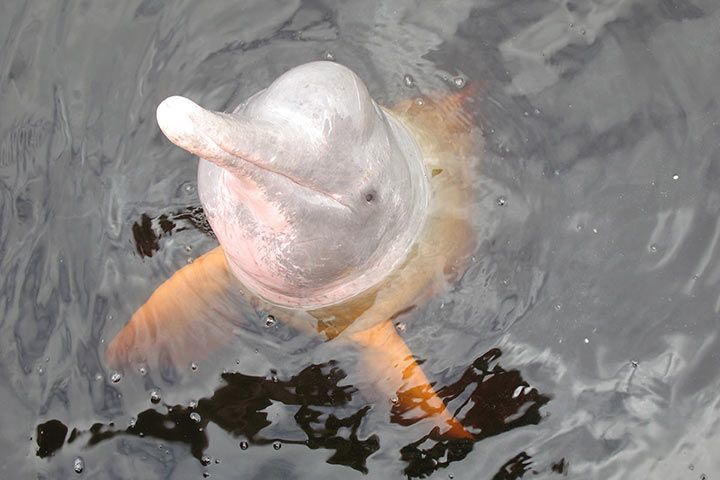
River dolphins are mammals that inhabit rivers. They have perfectly adapted to life in freshwater. The most well-known is the Amazon river dolphin, also called Boto. It uniquely possesses a vibrant, pink skin. Not much is known about the lifestyle of river dolphins, as there are only a few of these animals, and they are difficult to observe in murky waters.

Pink River Dolphin Pink River Dolphin - Photo: Ivan Sgualdini/Shutterstock


ADVERTISEMENT - ARTICLE CONTINUES BELOW

Species

There is ongoing debate among biologists about which species qualify as river dolphins. Some species do not exclusively reside in rivers but can also be found near coasts or in bays. Currently, the following seven species are recognized as river dolphins:

  • Amazon river dolphin in the Amazon (South America)
  • Tucuxi dolphin in the Amazon (South America)
  • La Plata dolphin in the delta of the Rio de la Plata (South America)
  • Baji or Chinese river dolphin in the Yangtze (China)
  • Ganges river dolphin in the Ganges (India)
  • Indus river dolphin in the Indus (Pakistan)
  • Irrawaddy dolphin in the Mekong (Southeast Asia)

Ganges River Dolphin Ganges River Dolphin - Photo: Kukil Gogoi [CC BY-SA 4.0], via Wikimedia Commons

Distribution and Habitat

Distribution in South America

River dolphins in South America are found in Bolivia, Brazil, Colombia, Ecuador, and Peru. They inhabit rivers, particularly the Amazon, Orinoco, and Rio de la Plata.

Distribution in Southeast Asia

Southeast Asia is also home to (false) river dolphins. They can be found in China, India, Pakistan, Bangladesh, Myanmar, Thailand, Cambodia, Vietnam, Malaysia, and Indonesia. Many reside in large rivers such as the Yangtze, Ganges, and Indus.

Habitat

River dolphins inhabit rivers of all sizes – from small streams to the largest rivers. In search of fish or other prey, they use their long snouts to stir up the mud at the riverbed.


ADVERTISEMENT - ARTICLE CONTINUES BELOW

Way of Life

While dolphins in the ocean form large schools, river dolphins mostly live solitary lives. They only occasionally come together in groups, for instance, when they enter fish-rich areas.

River Dolphin Characteristics River Dolphin Characteristics - Photo: Erni/Shutterstock

Anatomy and Appearance

Size and Weight

The Amazon river dolphin is the largest. It measures between 6.5-9.8 feet (2-3 meters) in length and weighs between 187-352 pounds (85-160 kg). The La Plata dolphin is the smallest, reaching only about 4.9 feet (1.5 meters) in length and weighing 110 pounds (50 kg).

Skin Color

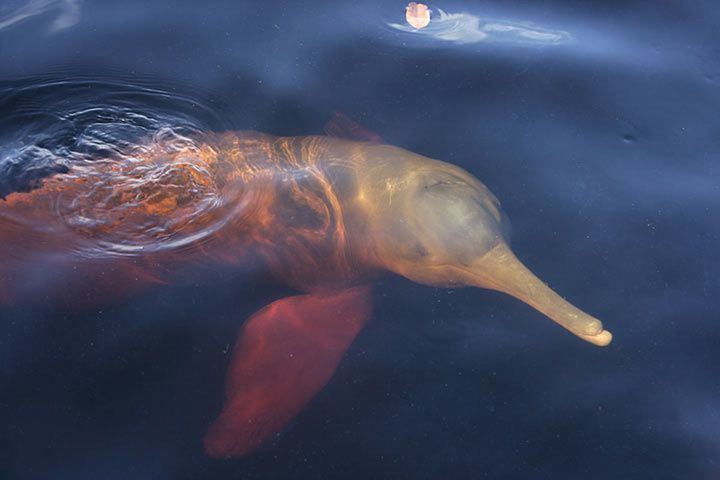
The Chinese river dolphin is pale gray to bluish. The La Plata river dolphin, the Indus dolphin, and the Ganges dolphin are olive brown to gray-brown. The Irrawaddy dolphin and the Tucuxi dolphin are gray. Only the Amazon river dolphin is pink.


ADVERTISEMENT - ARTICLE CONTINUES BELOW

Body Shape

River dolphins appear rather bulky compared to other dolphin species. They have a broad forehead, which is also referred to as a "melon".

Large Fins

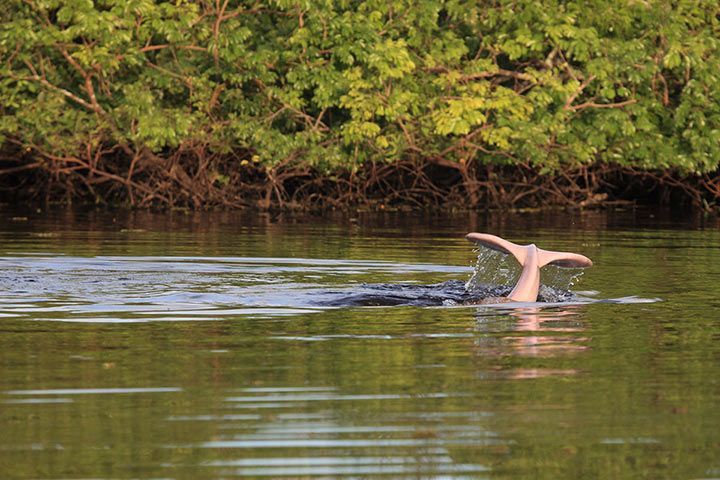
River dolphins are perfectly adapted to life in rivers. Their large flukes and flippers make them very agile, allowing them to navigate well through narrower or shallower parts of the river.

Snout

River dolphins have a long, slender snout - except for the Irrawaddy river dolphin.

Few Teeth

Each of the upper and lower jaws contains 25-36 teeth.

The Pink River Dolphin

Of all river dolphins, only the Amazon dolphin has bright pink skin. How does this pink color develop? What advantage does it provide?

The Older, the Pinker

It is partly related to age, as most only turn pink when they are older. They lose their natural color, and at the same time, the blood vessels become more visible.

Pink Scars

Notably, it is mainly the males that are pink. The skin color may also result from the many fights with male rivals – as injuries lead to scars.

Pink as Camouflage

The color might also be a response to the environment. During heavy rainfall, the water in the rivers appears somewhat reddish. With a similar skin tone, dolphins are better camouflaged and have improved chances of survival.

Amazon River Dolphin Amazon River Dolphin - Photo: Shutterstock

Dolphin or River Dolphin – What’s the Difference?

Dolphins that inhabit saltwater are quite different from those that live in rivers. Both have adapted to their respective environments.

Differences in Behavior and Abilities

River dolphins do not reside in clear seawater but in rivers where sand and mud obscure visibility. They do not need to see well – and they don’t. They rely much more on echolocation. Unlike dolphins, river dolphins are mostly solitary.

Differences in Body Structure

They possess a much longer snout than most other dolphin species because they forage in the muddy riverbed. Additionally, their layer of fat (the 'blubber') is much thinner since rivers are generally warmer. They are fundamentally smaller, allowing for better navigation. As they do not swim particularly fast, they do not require a dorsal fin. Instead, they have a small hump.

Funny River Dolphin Funny River Dolphin - Photo: guenermanaus/Shutterstock

Senses and Abilities

Sense of Sight

Most river dolphins are nearly blind. This isn't too concerning, as good eyesight wouldn't be much help in the murky rivers they inhabit.

Sense of Hearing

They rely heavily on their excellent hearing and echolocation. However, they don't primarily hear with their ears; instead, they perceive sounds mainly through their jawbones.

Life Expectancy

Depending on the species, river dolphins can live 10 to 30 years in the wild. However, most only live 12 to 18 years due to threats from fishing, boat propellers, environmental toxins, and tourism.

Irrawaddy River Dolphin Irrawaddy River Dolphin - Photo: Jodphoto/Shutterstock

Enemies and Threats

Natural Enemies

The largest natural predators of river dolphins include anacondas, jaguars, caimans, crocodiles, and tigers. Typically, they only catch young dolphins, as the adults are too clever and swift.

Human Impact

The greatest threat comes from human activities.

Tourism

River dolphins are very friendly and curious about us humans. Unfortunately, this trait often leads to their exploitation for the popular tourist attraction of "swimming with dolphins". While the animals seem to enjoy it, we humans often misinterpret their body language. Swimming with dolphins, whether in the wild or in captivity, causes significant stress, suffering, and unnatural behaviors in these creatures. As a result, there is an increased risk of injury, illness, and death.

Fishing

River dolphins often get caught in fishermen's nets and drown. Sometimes, fishermen use explosives to kill fish more quickly and in larger numbers, which also leads to the death of river dolphins. Additionally, most rivers are overfished due to our demand for fish. However, dolphins cannot survive without fish and starve, while we humans can. A simple way to help all the dolphins in the world and many other marine animals is to eat less fish. There are plenty of delicious alternatives.

Vessel Strikes

River dolphins have good hearing, but they can't always avoid boats in time when one crosses their path. They are also nearly blind and struggle to see boats clearly. As a result, they often collide with boats and suffer life-threatening injuries.

Pollution

In the countries where river dolphins live, toxins are often dumped into rivers, leading to the death of the dolphins.

Conservation Status

All river dolphins are endangered or even at risk of extinction. The Chinese river dolphin is likely already extinct, with the last known individual sighted in 2002. We have compiled the latest figures from the IUCN and WWF, which come from various years and are only estimates:

  • La Plata dolphin: approximately 25,000 individuals
  • Amazon river dolphin: approximately 10,000 individuals
  • Irrawaddy dolphin: approximately 7,000 individuals
  • Tucuxi dolphin: approximately 5,200 individuals
  • Ganges river dolphin: approximately 3,500 individuals
  • Indus river dolphin: approximately 1,980 individuals
  • Chinese river dolphin: -

River Dolphin Photo: hecke61/Shutterstock

Importance for the Ecosystem

River dolphins are apex predators, as they sit at the top of the food chain. They help maintain a balance of species in nature. The population of river dolphins reflects the diversity of the animal and plant life surrounding them.

Reproduction

Depending on the species, river dolphins have a gestation period of 8 to 14 months. A newborn calf measures about 27-39 inches (70-100 cm) in length and weighs 15-22 pounds (7-10 kg). They are nursed for a period of 8 to 12 months.

Animals in the Same Biome:


Featured Posts:


Whale Species Fact Sheets


ADVERTISEMENT


See all topics on animalfunfacts.net: