

Info on the Animal Classes Insects and Arachnids
1. Main Characteristics of Insects:
- Insects are invertebrates.
- Insects have an exoskeleton.
- Insects develop through metamorphosis into adult animals.
Evolution
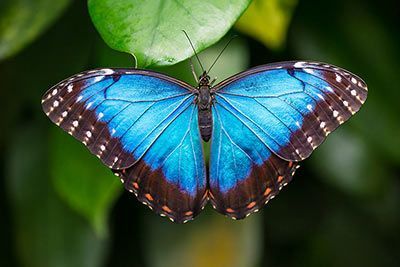
Insects (and spiders) are arthropods. They emerged about 400 million years ago and mostly live alone. Yet, there are also "social insects" such as ants and termites. Many of them live together in one area.
There are more than one million species of insects on earth – about two thirds of ALL creatures worldwide (including plants) are insects. They are perfectly adapted to their habitat and some of them would even survive a nuclear war – without moving their antennae.
How Do Insects Differ From Other Animals?
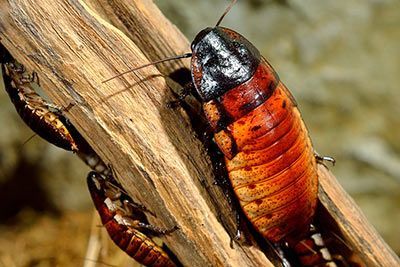
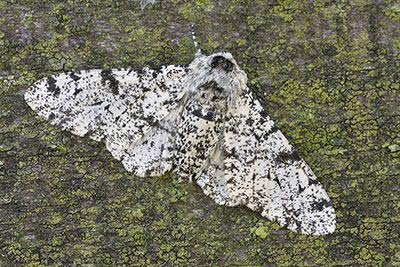
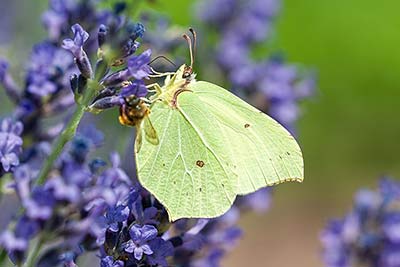
While other species have a skeleton with vertebrae and a spine, they have a so-called "exoskeleton". This serves as a supporting shell which keeps everything together from the outside. With regard to insects it is also called chitinous exoskeleton. It can be hard or soft. Most insects also have wings.
Lifestyle
Where Do Insects Live?
Insects easily adapt to their surroundings and have settled in the most diverse habitats. They live on the ground or underground, in the water, in icy regions, and in deserts.
How Do Insects Move?
Insects fly and crawl.
What Do Insects Eat?
Insects can be herbivores as well as carnivores. Some do even feed on their own species (e.g. dragonflies).
How Do Insects Reproduce?
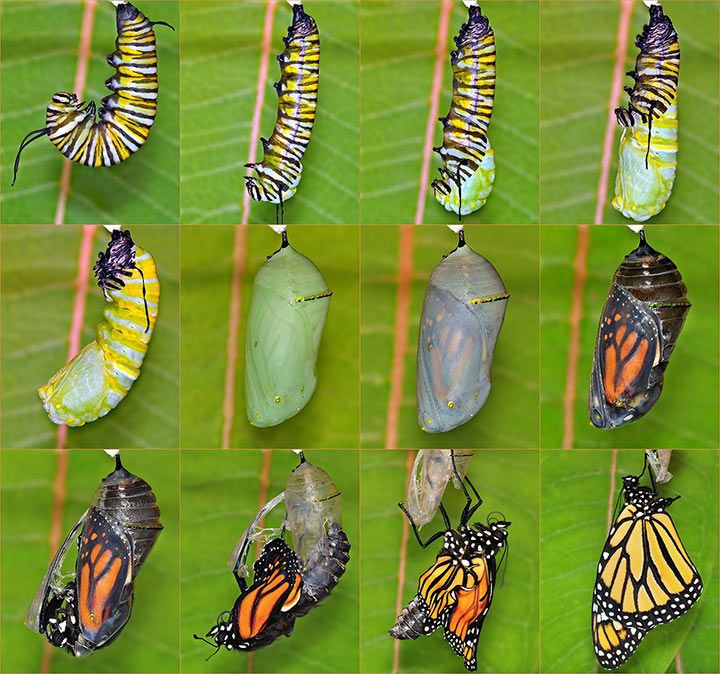
Most insects come into the world as caterpillars or larvae and transform into their final shape later-on. They pupate and emerge from their cocoons as adult animals. This process is called metamorphosis (Greek for "transformation").
Fun Facts
Insects As Medicine
For most of us it is a challenge to eat insects. For Chinese people this is quite normal. In the past they nibbled at dried cockroaches to cure belly aches and fever, or ladybugs against tooth aches. Today there is a lot of research going on concerning insects and spiders. Some of them might be successfully used as medication against cancer or cardiac insufficiency.
Species
There are about one million species of insects:
| Beetles: | 400,000 |
| Hymenoptera: | 200,000 |
| Butterflies: | 150,000 |
| Diptera: | 85,000 |
| Bugs: | 40,000 |
| Lice: | 15,000 |
| Dragonflies: | 4,900 |
| Fleas: | 2,000 |
2. Main Characteristics of Arachnids
- Arachnids are invertebrates.
- The bodies of arachnids are mostly divided into a front and a back part.
- Arachnids have eight legs.
- Arachnids aren’t insects.
Evolution
Like insects, spiders are arthropods. The first arachnids lived about 500 million years ago.Often insects and arachnids are put into the same category. Yet, from a biological point of view, they have nothing in common. By the way: Scorpions and ticks are also arachnids.
How Do Arachnids Differ From Other Animals?
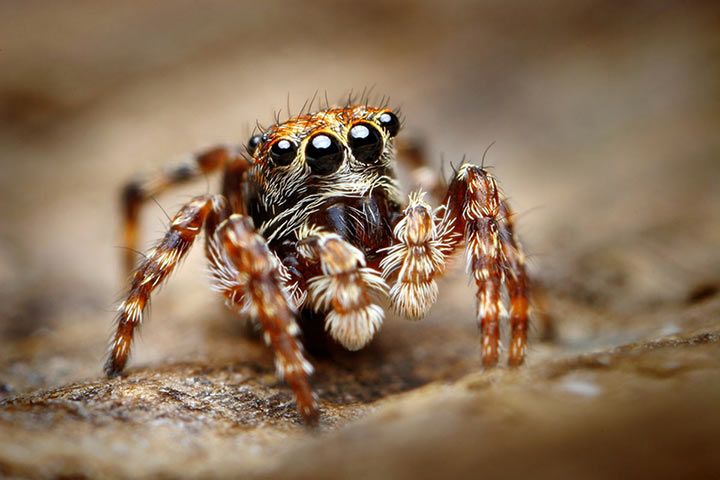
Arachnids can be identified, if you count their legs. They have four pairs of walking legs, this makes a total of eight legs. So if you would like to know if you are looking at a beetle or at a tick, then it is the best idea to quickly count the legs. The body is mostly divided into a front and a back part. The mandibles of arachnids generally include chelicerae. A prominent feature of scorpions is their long tail with its sting.
Lifestyle
Where Do Arachnids Live?
They can live everywhere except from the oceans and the Antarctic region.
How Do Arachnids Move?
Depending on the species, arachnids can run, climb, and jump.
What Do Arachnids Eat?
Arachnids normally feed on insects - yet there is also a "vegetarian spider".
How Do Arachnids Reproduce?
Arachnids lay eggs, scorpions give birth to living babies.
Species
There are about 100,000 species of arachnids:
| Mites: | 40,000 |
| Synanthrophic spiders: | 30,000 |
| Harvestmen: | 3,700 |
| Solifuges: | 850 |
| Scorpions: | 600 |
Biodiversity
There are over 100,000 arachnids, all of which are different. They can be large, small, poisonous, colorful, etc. Some dig traps, others are vegetarian or live under water. But why are there so many different? More about biodiversity.
- Watch Now on animalfunfacts.net
 All About Insects and Arachnids