

Infos on the Animal Class Birds
Main Characteristics of Birds:
- Birds are vertebrates.
- Birds have feathers.
- Birds have a constant body temperature.
- Birds have a beak.
- Birds lay eggs.
Evolution
Birds are vertebrates that developed from dinosaurs about 150 millions of years ago. The first known bird is the Archeopteryx. It was not really good at flying. The birds of our times show stunning flying skills.
Anatomy and Appearance
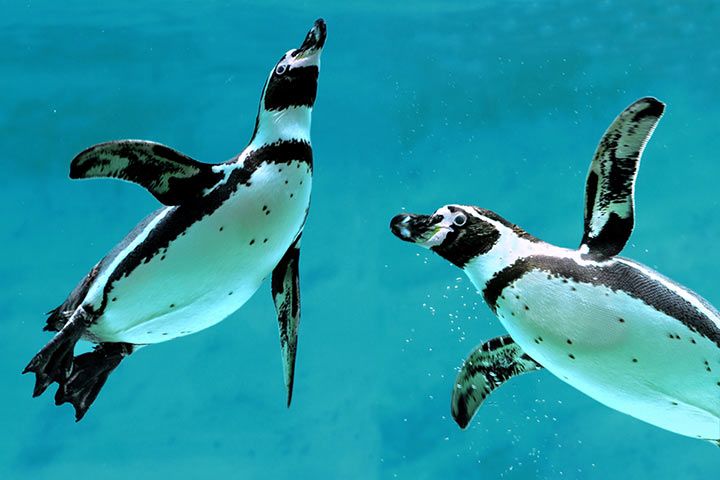
By the way: All birds have a plumage. But this does not mean that all of them can fly! Penguins are not even good at walking, they stagger about rather clumsily. Yet they are highly skilled swimmers.
Ostriches are perfect runners. But even if it might look like they would take off at 70 km/h ... they are also unable to fly. Black martins spend almost their whole life in the air. They have been permanently flying for three (!!!) years when they start to breed for the first time.
How Do Birds Differ From Other Animals?
All birds have a plumage. The material composition of the feathers is very similar to our finger nails and hair. The hands and fingers of birds have been transformed into wings. Instead of a mouth with teeth, birds have a beak.
Habitat
Where Do Birds Live?
Birds have adapted to all different kinds of habitats. They live in forests, desert regions, or even in the cold Polar regions. They do not only live in trees, but also on the ground.
Locomotion
How Do Birds Move?
They spread and flap their wings to fly. Flightless birds run or swim.
Diet
What Do Birds Eat?
Birds are herbivors, carnivores, or omnivores, depending on the species.
Reproduction
How Do Birds Reproduce?
Birds mostly build nests, in which they lay and hatch (keep warm) their fertilized eggs.
Fun Facts
Birds on Power Lines
Have you ever asked yourself, why birds sit on power lines? The electricity flowing through the wires generates heat. Thus, the power line serves as a foot warmer for birds. But why don't birds fall off the line when they're asleep? The answer is simple: While birds relax, the muscles which control the movement of their claws contract. It is exactly the other way round with us. Amazing, isn't it?
Species
There are about 9,000 bird species:
| Starlings: | 5,300 |
| Apodiformes: | 400 |
| Wading birds: | 350 |
| Parrots: | 335 |
| Pigeons: | 300 |
| Birds of prey: | 280 |
| Gamebirds: | 270 |
| Cranes: | 205 |
| Geese: | 15 |
Biodiversity
There are nearly 20 species of penguins. For example, the Emperor Penguin. He is the only one who can survive at -40 degrees Fahrenheit (-40 degrees Celsius). Gentoo penguins live in warmer areas where there are more enemies. That's why they are smaller, thinner and nimble. More about biodiversity.
- Find Out More:
- The Fastest Birds
- The Biggest, Heaviest, Smallest ... Birds
- Crow or Raven - What’s the Difference?
- Exciting Facts about Birdsong
- Watch Now on animalfunfacts.net:
 All About Birds