

Info on the Animal Class Mammals
Main Characteristics of Mammals:
- Mammals are vertebrates.
- Mammals have a constant body temperature.
- Mammals have hair.
- Mammals are the only animals giving birth to living babies.
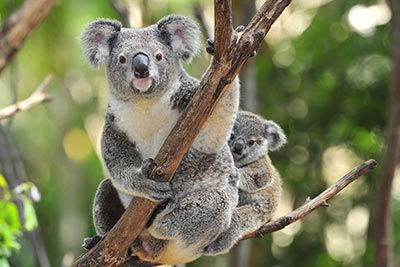
- Mammals feed their offspring on breast milk.
- Almost all mammals are four-legged animals.
Evolution
The first mammals lived on our earth about 200 million years ago. At that time they were rather small. After the dinosaurs had become extinct, the mammals finally had enough space to further evolve and develop (without being eaten before by the dinos).
Habitat
Where Do Mammals Live?
Mammals live on the ground, underground, in the water and in the air.
Diet
What Do Mammals Eat?
Mammals are herbivores, carnivores, or omnivores – in short, they include every feeding habit. Yet, it is remarkable that the largest terrestrial mammals are herbivores (elephants, giraffes), although they only feed on the green parts of plants. They permanently need food, while animals of prey can go hungry between meals for a while.
Locomotion
How Do Mammals Move?
There are many varieties of mammals. They can move in many different ways: swim, crawl, jump, dive, climb, fly and run.
Reproduction
How Do Mammals Reproduce?
Mammals give birth to babies that already start to develop in their mother’s womb. Exceptions are egg-laying mammals such as the platypus or the echidna.
How Do Mammals Differ from Other Animals?
In order to distinguish mammals from other animal species , you can apply the following rule of thumb: Does the animals have an udder or teats?? Then it is a mammal. As the word already suggests, mammals breast-feed their offspring. he breast milk is produced by the mammary glands of the udder. It provides all the most important nutrients for the young animals.
Furthermore, mammals are the only animals that give birth to living babies (with exceptions, such as the platypus or the echidna).
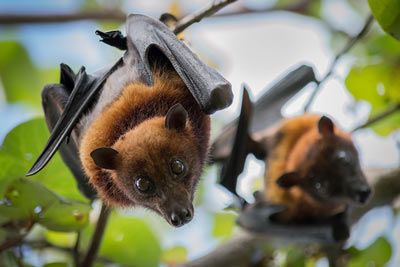
Even if it cannot always be instantly recognized: Basically, all mammals are quadrupeds. Sometimes their arms have transformed into wings (bats) or they have a fluke or tailfin (whales, dolphins) instead of legs. Birds have a plumage, snakes have scales and beetles have exoskeletons, but only mammals have hair. Hair helps to keep the body temperature at the same level, no matter if the environment is cold or hot.
Intelligence
Amongst all animals, the mammals are the most advanced class. Their brains – particularly the cerebrum – are significantly further developed than those of other animals. They cannot think like human beings, but they are able to learn things and control their actions.
Species
There are about 6,300 species of mammals:
| Rodents: | 2,280 |
| Bats: | 1,400 |
| Insectivores: | 450 |
| Primates: | 500 |
| Marsupials: | 320 |
| Animals of prey: | 280 |
| Hoofed animals: | 290 |
| Toothed/baleen whales: | 90 |
| Lagomorpha: | 80 |
| Xenarthrans: | 36 |
| Pangolins: | 8 |
| Egg-laying mammals: | 5 |
| Sea cows: | 4 |
| Elephants: | 3 |
Biodiversity
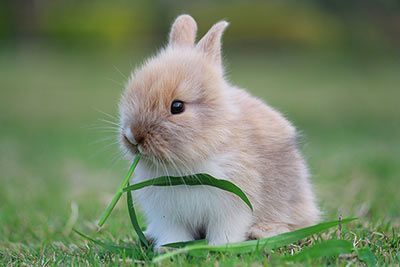
Hares have a brown coat and long ears. That certainly applies to the brown hare. But there are many more rabbits and hares. For example, the polar hare has a white coat in winter and the black-tailed jackrabbit has particularly large ears. More about biodiversity.
- Watch Now on animalfunfacts.net:
 Endangered Animal Species
 All About Mammals