Bee or Wasp - What’s the Difference?
3. Stingers and Stinging
If an insect is flying around you, you probably want to know right away what animal it is. You may have hundreds of questions. Should I be afraid? How aggressive are bees? How dangerous are wasp stings? Can they sting more than once? What should I do if I see a hornet?
Sting Behavior:
- Bee: Barbed stinger, dies after a sting
- Bumblebee: No barbed stinger
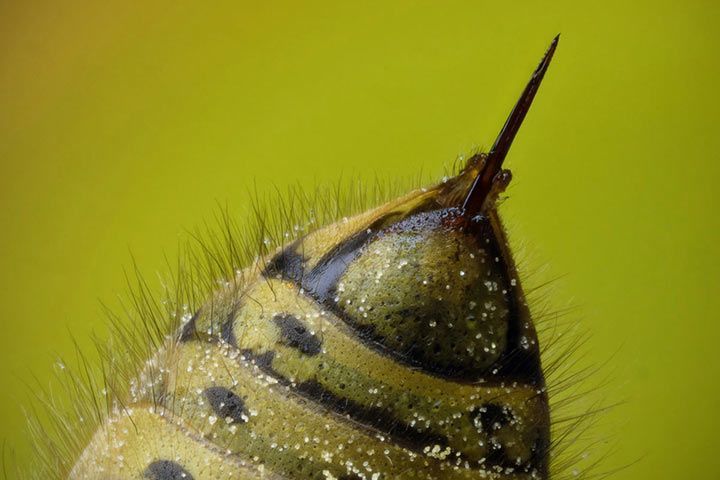
- Wasp: No barbed stinger, may sting serveral times
- Hornet: No barbed stinger, may sting multiple times
Does a Bee Die After it Has Stung?
Yes. Its stinger has barbs that stick in the skin. The bee can’t pull its sting back out, so the whole sting is ripped out of the bee, causing deadly injuries. Wasps, on the other hand, can sting several times because they can just pull their stinger back out.
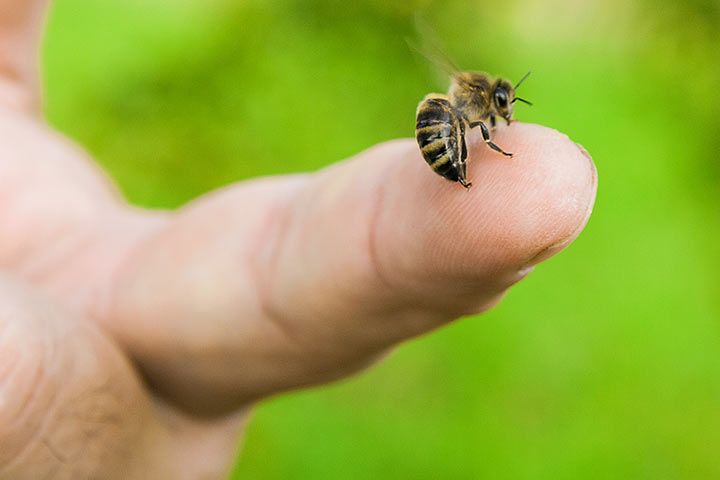 Photo: Kostiantyn Kravchenko/Shutterstock
Behavior Tips
It’s best to stay calm - even if it’s hard. If a wasp or a bee gets too close, you definitely shouldn’t wildly wave your arms around. Do NOT try to blow the insect away. This will achieve the opposite, making the animal aggressive - the carbon dioxide in our breath makes wasps more prone to attack.
Stung by a Bee?
Even if you do get stung, it’s usually painful but not too bad. Unless you’re allergic or unaware that you have an allergy. In this case, a sting can be very dangerous, or even fatal.
Are Bumblebees Dangerous?
Bumblebees can sting but are incredibly peaceful. They almost seem too lazy to sting. They only sting in an extreme emergency. Fun fact: before bumblebees sting, they lift their middle legs as a warning. Do you think humans would spot this?
Are Hornets Dangerous?
Despite their impressive size, hornets are very peaceful. You shouldn’t get near to their nests though, as they defend a 6-20 feet (2-6 meters) perimeter around them. So you should be really very careful. Hornets can also sting more than once!
Wasp
- Table of Contents
- 0. Introduction
- 1. Size, Shape, Hair
- 2. Color
- 3. Behavior, Stinger
- 4. Diet
- 5. Summary With All Characteristics