animalfunfacts.net - The Animal Encyclopedia for Kids

ADVERTISEMENT

Top 15 Weirdest Animals in the World

#12 Blue Ocean Slug (Glaucus atlanticus)

Blue Ocean Slug - Photo: Serkan Ogdum/Shutterstock

Facts

  • Class: Snails and slugs
  • Order: Opisthobranchia
  • Family: Gastropods
  • Distribution: South Africa, Europe, Australia, Mozambique
  • Habitat: Warm water bodies, near the surface

A "Real" Pokémon: The Little Blue Dragon from the Sea

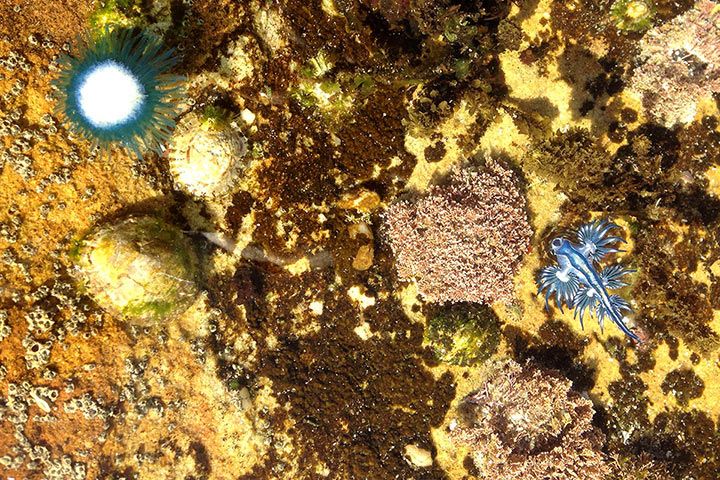
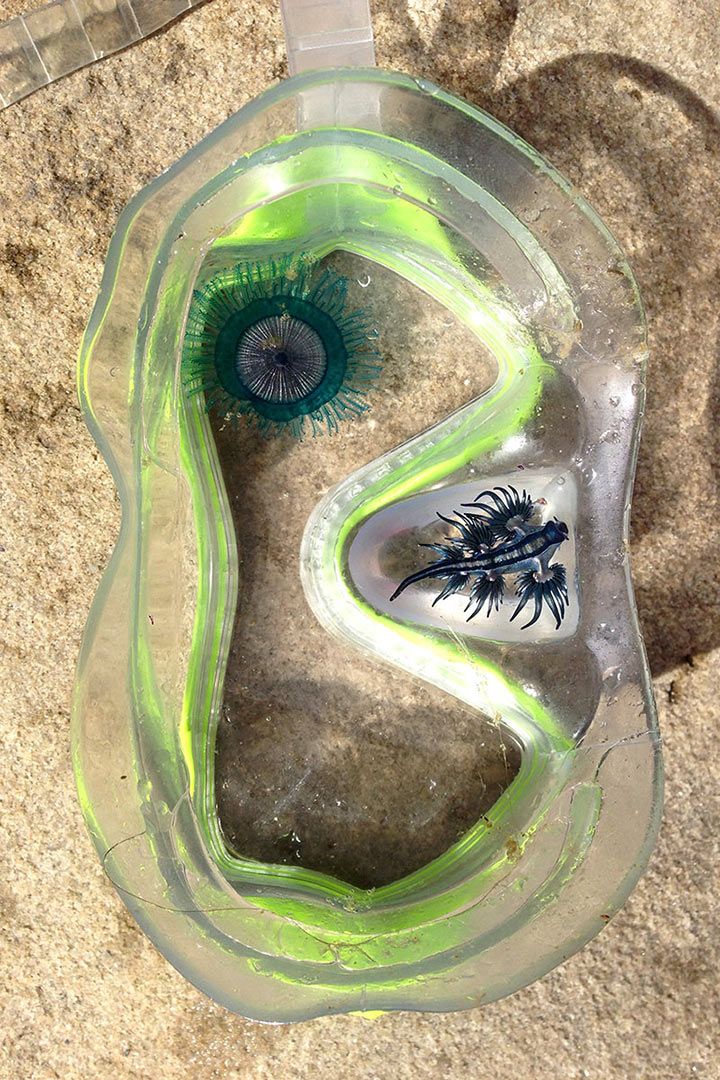
Due to its stunning, finger-like appendages and vibrant blue hue, this creature is also known as the sea swallow, blue angel, or blue dragon. When you look at it, it resembles a mythical being or a genuine Pokémon! It's hard to believe: even though it appears to be a tiny miniature dragon, it actually belongs to the family of snails. However, it doesn't have a protective shell; instead, it lives entirely "naked".


ADVERTISEMENT - ARTICLE CONTINUES BELOW

This animal only grows to about 1.2 inches (3 cm) in length, but it has a lot of personality. The blue ocean snail spends its entire life upside down at the water's surface. To avoid sinking, it swallows a small air bubble, which it keeps in its stomach. This way, it floats along like a little air mattress, drifting peacefully through the world's oceans.

Blue Ocean Slug Blue Ocean Slug - Photo: Serkan Ogdum/Shutterstock

A Thieving Masterpiece: How the Snail Steals Poison

Don’t let the pretty appearance fool you – this nudibranch is an incredibly dangerous predator! It hunts creatures that are much larger and more lethal than itself, such as the infamous Portuguese Man o' War (a highly toxic jellyfish species). The tentacles of this jellyfish are covered in millions of tiny stinging capsules that can be deadly to other animals and even humans.

However, the blue ocean snail is completely unfazed by this. It is entirely immune to the jellyfish's venom. It simply nibbles on the jellyfish's tentacles and digests them. The craziest part? It doesn’t destroy the jellyfish's toxic stinging capsules. Instead, it safely transports the sharp capsules through its own body and stores them in the tips of its own “wings” (the cerata). In this way, it steals the poison from its prey and uses it as an extremely powerful weapon against its own enemies.

Perfect Camouflage with the 'Head-Over-Tactics'

Since the snail always floats on its back at the surface, it employs a brilliant camouflage technique. Biologists refer to this as countershading. Its underside (the belly), which faces the sky above the water, is brightly colored in blue. Birds looking down at the sea find it nearly impossible to spot the snail against the blue water.


ADVERTISEMENT - ARTICLE CONTINUES BELOW

Conversely, its upper side (the back) faces down towards the ocean floor and is colored silver-gray. Predatory fish, gazing upwards from the depths, also struggle to see the snail against the bright, sunlit sky. It's a perfect optical illusion in both directions!

Continue to Place 13: A giant pillbug as big as a dog!

On the next page, you'll encounter a creature that almost everyone recognizes from their own basement or garden – but in an absolutely XXL size! This deep-sea being resembles a gigantic insect in knight's armor, weighs as much as a small dog, and feeds on decaying carcasses at the ocean floor. Click ahead now to meet the creepy giant pillbug!


ADVERTISEMENT - ARTICLE CONTINUES BELOW


Sources:

  • Observations on a collection of Glaucus from the Gulf of Aden with a critical review of published records of Glaucidae (Gastropod, Opisthobranchia (https://www.frontiersin.org)