animalfunfacts.net - The Animal Encyclopedia for Kids

ADVERTISEMENT

Harbour Porpoise

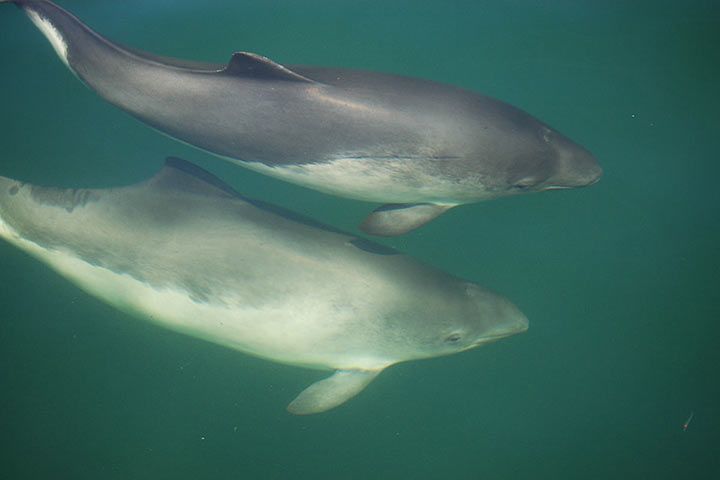
Unlike Dolphins, Porpoises Have a Short Snout Unlike Dolphins, Porpoises Have a Short Snout - Photo: AVampireTear [CC BY-SA 3.0], via Wikimedia Commons

Harbour Porpoise Facts

Size 5.2-6.5 feet (1.6-2 meters)
Speed 15 mph (22 km/h)
Weight 110-165 pounds (50-90 kg)
Lifespan 12-15 years
Food Fish, octopuses, squid
Predators Great white shark, hammerhead shark, blue shark, orca
Distribution Northern Hemisphere, calm waters (coasts, fjords)
Habitat Shallow seas, marine bays, coasts, fjords
Order Whales
Suborder Toothed whales
Family Porpoises
Scientific name Phocoena phocoena
Characteristics Dolphin-like whales with a rounded head and short snout

Main Characteristics

Harbour porpoises are small whales. Although they closely resemble dolphins, they are more closely related to the narwhal and the beluga whale. When they surface, they do not spout water but instead make a distinctive sound: a dull "pfff". It sounds quite similar to a brief, deep sneeze. The harbour porpoise is the only whale found in the Baltic Sea. Unfortunately, it is endangered in that region. This profile focuses on it.

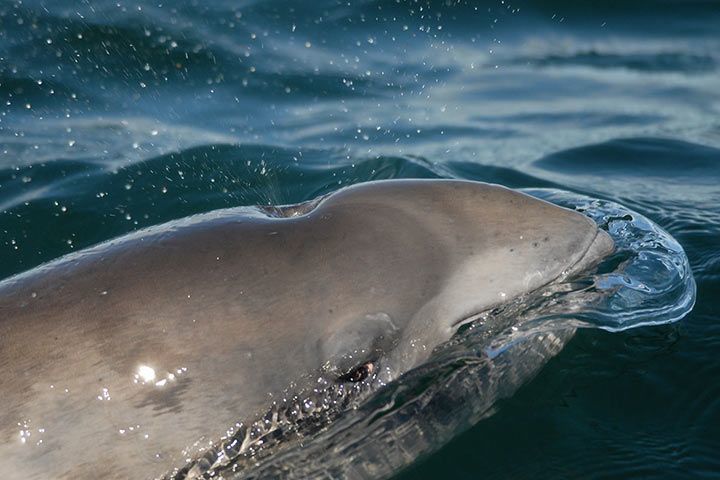
Harbour Porpoise Harbour Porpoise - Photo: Ecomare/Sytske Dijksen [CC BY-SA 4.0], via Wikimedia Commons


ADVERTISEMENT - ARTICLE CONTINUES BELOW

Species

There are seven species: harbour porpoise, vaquita, Burmeister's porpoise, Yangtze finless porpoise, Indo-Pacific finless porpoise, Dall's porpoise, and spectacled porpoise.

Name

Scientific Name

The scientific name of the harbour porpoise is Phocoena phocena. In German, this translates to "little seal", as it has a large, round head and a short snout.

Nickname

The harbour porpoise is also referred to as the "puffin pig". „puffin“ due to the sound it produces when it comes to the surface, and „pig“ because the term porpoise comes from the Latin word "porcus" for "pig."

Distribution and Habitat

The harbour Porpoise is the only whale that resides in the Baltic Sea year-round. However, its range is not limited to the Baltic. It can be found in the oceans across the entire Northern Hemisphere, including the North Atlantic and North Pacific. This species prefers shallow waters that are no deeper than 660 feet (200 meters). As a result, it is often seen along the coasts, for instance, in Germany, Denmark, the Netherlands, the United Kingdom, Norway, Sweden, Poland, Iceland, Greenland, and Canada.

Way of Life

Porpoises are social creatures, typically found in very small groups of 2-3 individuals. However, they can also form larger groups of up to 20. Unlike dolphins, they tend to be more subdued and rarely leap out of the water.


ADVERTISEMENT - ARTICLE CONTINUES BELOW

Harbour Porpoise Harbour Porpoise - Illustration

Anatomy and Appearance

Size and Weight

The Common Porpoise measures between 5.2-6.5 feet (1.6 to 2 meters) in length and weighs around 110-165 pounds (50-75 kg).

Nose

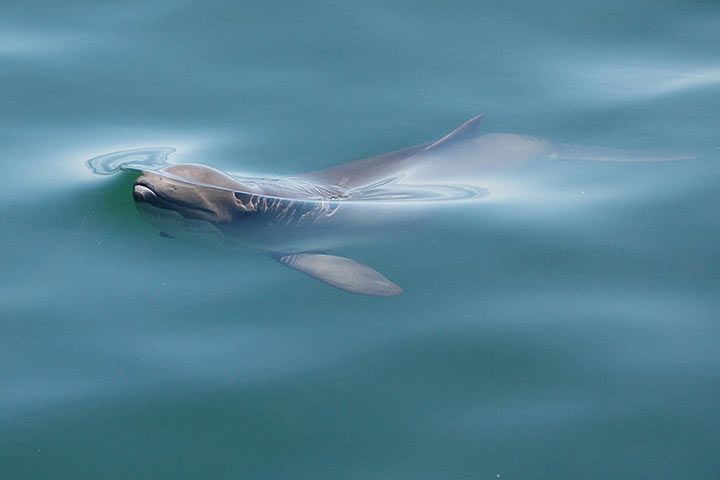
The easiest way to distinguish between porpoises and dolphins is by their noses. Dolphins have long, slender snouts, while porpoises possess a very short, rounded nose.

Fins

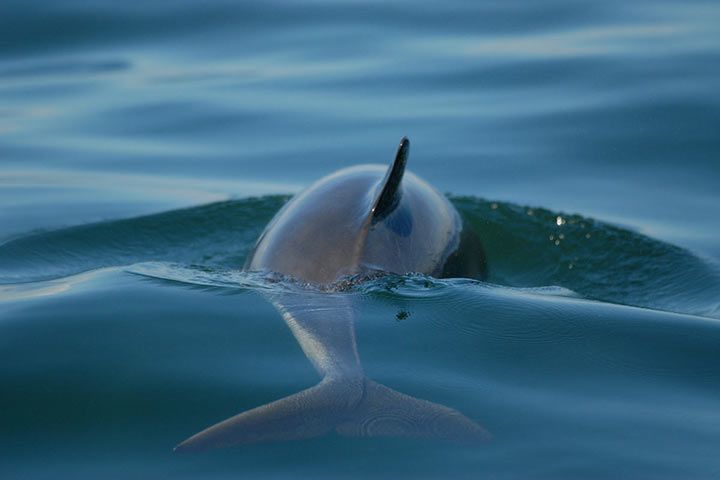
In contrast to dolphins, porpoises have much shorter fins. Their pectoral fins are rounder, the tail fin is thicker, and the dorsal fin is triangular.


ADVERTISEMENT - ARTICLE CONTINUES BELOW

Color

Porpoises feature a dark gray back and a light gray belly.

Teeth

Porpoises have significantly fewer teeth compared to dolphins. Additionally, their teeth are shaped differently; they are more triangular rather than narrow and pointed. This shape helps them grip slippery prey like squids.

Diet

Porpoises are carnivorous, primarily feeding on herrings, cod, and pollock. They also consume squids, octopuses, and crustaceans.

Harbour Porpoise Harbour Porpoise - Photo: National Park Service [Public Domain ], via Wikimedia Commons

Behavior

Always on the Hunt

Porpoises require 9-11 pounds (4-5 kg) of food daily, which is about 10% of their body weight. This is quite a lot for their size, but the seas they inhabit are very cold. Therefore, they need a significant amount of energy to maintain their body temperature. Additionally, their layer of fat, known as 'blubber', is much thinner compared to other whales.

Senses and Abilities

Diving

Porpoises can dive as deep as 590 feet (180 meters).

Echolocation

Porpoises use echolocation to navigate and locate prey. They produce sounds and send them in various directions. When these sounds hit an object, like an animal or a rock, they bounce back. This allows the porpoise to know its location and whether there are prey nearby, even in poor visibility.

Speed

The harbour porpoise is a fast swimmer, capable of reaching speeds up to 15 mph (25 km/h).

Life Expectancy

Porpoises can live for over 20 years. However, most do only reach an age of 12-15 years due to dying in fishing nets or becoming ill from pollution.

Harbour Porpoise Harbour Porpoise - Photo: Erik Christensen [CC BY-SA 3.0], via Wikimedia Commons

Enemies and Threats

Natural Enemies

The harbour porpoise has few natural enemies: the great white shark, hammerhead shark, blue shark, and orca.

Human Impact

The greatest threat comes from humans.

Fishing Nets

Every year, thousands die in fishing nets because they get caught and drown. In the Baltic Sea, they are even threatened with extinction - despite having no natural enemies there. You can help the porpoises by eating less fish. Every plant-based meal means less suffering for animals.

Noise

The effects of noise are greatly underestimated. Underwater, sounds are particularly loud and can travel for many miles. Imagine having to wear headphones all day while someone blasts techno or heavy metal at full volume. How would you communicate with others, and how focused would you be while crossing a street? This is similar to what marine animals experience. They struggle to communicate with each other and become easy targets for predators.

Pollution

The Baltic Sea is considered one of the dirtiest seas in the world. The main issue is over-fertilization from agriculture (primarily for growing feed for livestock). Additionally, the water is contaminated with pollutants like heavy metals and chemicals.

Conservation Status

The common porpoise is not classified as endangered; however, it is threatened with extinction in the Baltic Sea. The most endangered porpoise is the Vaquita, which lives in the Gulf of California. According to a 2022 count by the IUCN, only 18 individuals remain.

Harbour Porpoise Harbour Porpoise - Photo: Ben Phalan [CC BY 4.0], via Wikimedia Commons

Reproduction

Porpoises mate year-round. The gestation period lasts 10-11 months, and typically only one baby is born. The calf is nursed for about eight months. By 24 months, it becomes independent but stays with its mother for 3-6 years. Even after that, the cow and calf maintain a very close bond throughout their lives.

Animals in the Same Biome:


Sources:


Whale Species Fact Sheets


ADVERTISEMENT


See all topics on animalfunfacts.net: